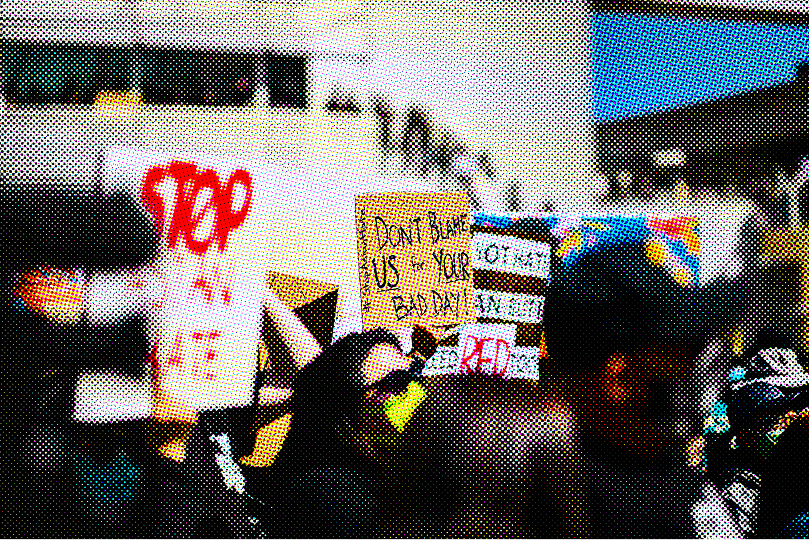
Picture this: it's matchday. Your sports team's fan community is buzzing, thousands of comments flooding in across your social channels. Buried in that volume, a scam account starts posting fake prize links. A coordinated hate-speech thread quietly takes root under a player's post. Neither trips your keyword filter. Neither gets flagged by your two-person moderation team, who are already overwhelmed. By the time someone notices, the thread has replies, shares, and screenshots circulating elsewhere. The story is no longer about the match.
The Real Cost of Getting It Wrong
Toxic content isn't just uncomfortable — it's measurable brand damage. Research shows that nearly two-thirds of global consumers say fraud incidents negatively impact their trust and loyalty toward a brand. That's scams alone. Layer in unchecked hate speech and toxic comments, and the compounding effect on brand trust is significant. Communities that feel unsafe don't stay. Advertisers notice sentiment shifts. Journalists screenshot what brands leave up.
Brands that treat moderation as a 'nice to have' aren't taking a neutral position. They're making an active choice to absorb that damage. That's not a risk management strategy — it's the absence of one.
Why Human Moderation Alone Can't Keep Up
Imagine trying to manage a live stadium crowd of 60,000 people with a single steward. That's what human-only moderation looks like at the scale most brands operate today. The volume is unmanageable, but the complexity is the deeper problem.
Hate speech, in particular, is linguistically sophisticated. It shifts in intensity, targets different groups, and changes meaning depending on context, platform, and language. Research into hate speech detection now recognises that effective classification requires identifying multiple dimensions simultaneously — the type of speech, its target, the target group, and its intensity. A keyword list cannot do this. It flags the obvious and misses the nuanced. Coordinated campaigns learn to work around static filters quickly. Brands need layered, intelligent detection — not a list of banned words.
What Effective Identification Actually Looks Like
There's a clear hierarchy to getting this right. Not all approaches are equal, and the gap between them is where brand damage happens.
1. Context-aware AI classification, not keyword lists
Modern deep learning frameworks can classify harmful content across multiple dimensions at once — not just flagging a word, but understanding intent, intensity, and who is being targeted. Multi-layered deep learning approaches to hate speech classification have demonstrated meaningful improvements in detection accuracy over simpler methods. Keyword lists are brittle and static. AI models trained on real community data adapt as language evolves. This is the foundation everything else builds on.
2. Unified cross-channel visibility
Toxic actors don't stay on one platform. Scam accounts, coordinated hate campaigns, and serial toxic commenters move across channels — sometimes deliberately, to avoid detection on any single one. You cannot identify what you cannot see. Unified conversation tracking across your social channels is non-negotiable for effective community protection. Gaps in visibility are gaps in your defence.
3. Real-time signals, not daily reports
By the time a weekly moderation report lands in your inbox, the harmful content has already been seen, shared, and screenshotted. Effective hate speech detection and online scam identification means flagging content at the moment it appears — not after it trends. Real-time monitoring is what separates a brand that gets ahead of a problem from one that issues an apology after the fact.
4. Sentiment and pattern trend detection
A single toxic comment is a data point. A cluster of them appearing around a specific event, account, or keyword is a signal worth acting on. Sentiment analysis gives you the ability to distinguish between isolated noise and an emerging threat. When you can see patterns forming in real time, you can intervene before a situation escalates — not after it has already shaped public perception of your brand.
The Sence Perspective: Intelligence Before Intervention
We believe the brands winning at community health aren't the ones with the fastest delete button. They're the ones who understand their community deeply enough to spot anomalies before they become incidents.
Our approach is built on that principle. Sence's AI moderation and sentiment analysis tools provide the infrastructure to monitor, classify, and act on harmful content in real time — across every channel your community lives on. We build bespoke models tuned to each brand's specific community, which means detection improves over time rather than staying static. As your community evolves, so does the intelligence behind your moderation. That's how you anticipate shifts rather than react to them. That's how you protect brand trust before it's tested.
Your Community Deserves Better Than Reactive Moderation
Protecting your brand community is not about playing defense. It's about having the intelligence infrastructure to stay ahead of hate speech, online scams, and toxic comments before they take hold. Your community — and your brand — deserve that standard. If you manage a sports team, a media brand, or a niche social network, explore how Sence's AI moderation tools are built for communities like yours. The conversation is already happening. Make sure you're ahead of it.